Chicken

$1.35per plate
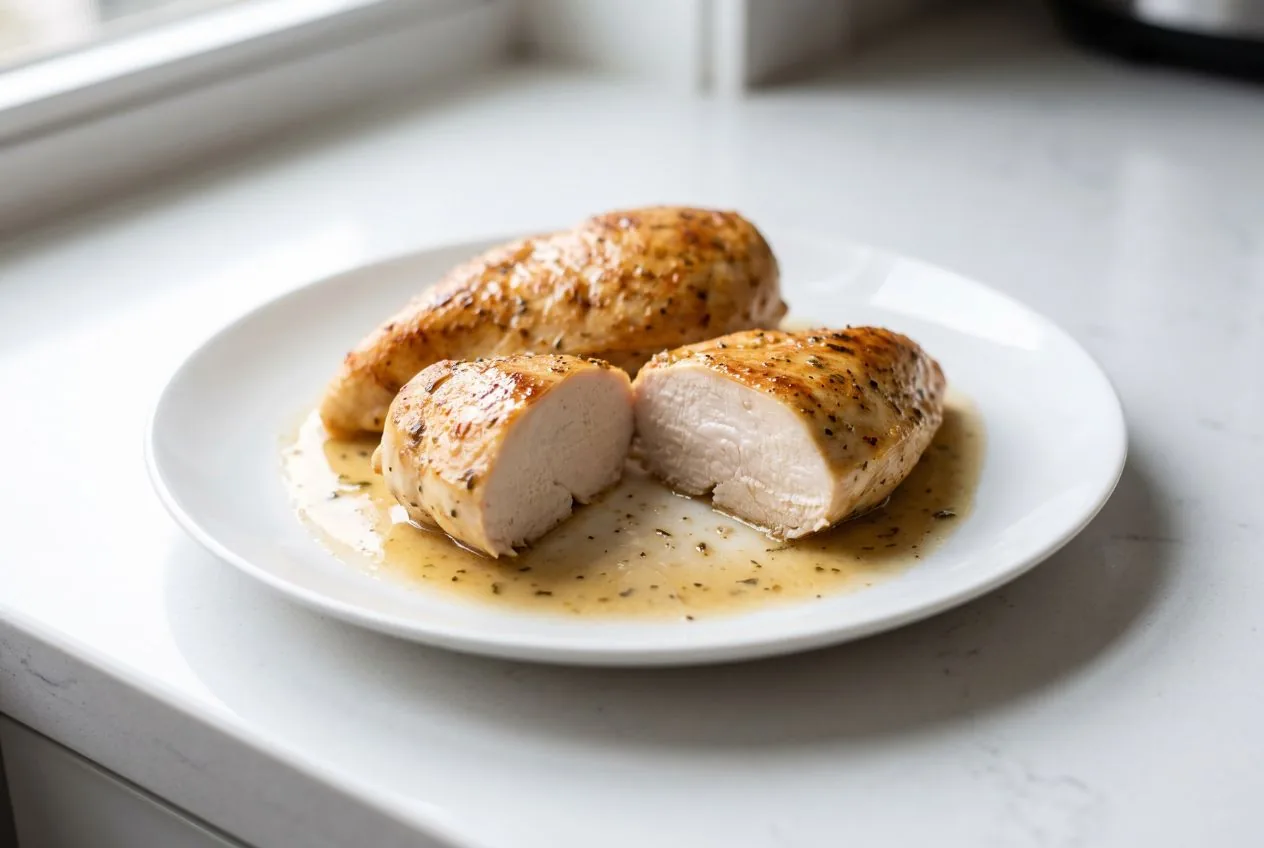
Chicken breast has a reputation for coming out dry, and it is entirely undeserved once you know the two moves that fix it: a quick salt brine and a hot, short bake. Salt the breasts while the oven heats, roast them at a high temperature just to 165 F, and let them rest, and you get juicy, tender meat with a seasoned golden crust every single time. It is the plainest, most useful chicken dinner there is, four servings for about a dollar a plate, and the base for a hundred other meals.
Pat the breasts dry and sprinkle them all over with salt while the oven heats to 425 F. Even fifteen minutes of dry brining seasons the meat through and helps it hold moisture, which is the real secret to juicy chicken.
Rub the breasts with the oil and the rest of the spices. If they are very thick on one end, pound them to an even thickness so they cook through at the same rate instead of drying out at the thin end.
Bake for 18 to 22 minutes, until the thickest part reaches 165 F. High heat cooks them fast so they spend less time drying out; a thermometer takes out all the guesswork.
Brush the hot breasts with butter and let them rest 5 minutes before slicing. Resting keeps the juices in the meat instead of on the cutting board.
Sliced or whole, the chicken keeps in a sealed container for 4 days and is excellent cold in a salad or sandwich.
Freeze cooked breasts, whole or sliced, for up to 3 months; slices thaw in minutes and drop straight into a hot dish.
Warm gently, covered, with a spoon of broth or water so the lean meat does not dry out; a low oven or half-power microwave is kindest to it.
Per-serving figures are estimated from standard ingredient data and are not medical or dietary advice.
Salt it ahead of time, cook it hot and fast to exactly 165 F, and let it rest before slicing. The dry brine seasons and holds moisture, the short bake limits drying, and resting keeps the juices inside.
A hot 425 F is ideal. It cooks the breast quickly so it spends less time in the oven drying out, giving a browned outside and a juicy center. Pull it the moment it hits 165 F.
It is the single best tool for chicken breast. Because the cut is lean, the window between done and dry is small; a thermometer lets you pull it at exactly 165 F instead of guessing and overshooting.
The estimated $4.35 total divided across 4 servings is about $1.09 each. The chicken is nearly the whole cost, so a family-pack price sets your real number.
As an Amazon Associate, Budget Plates may earn from qualifying purchases.